


What equipment to use to walk your dog? The essentials of a professional dog walker
A beautiful walk does not depend only on the path chosen. Discover how the right tools help you better understand your dog, strengthen confidence and give him more freedom in complete safety.
Richard Costaglioli
3/1/20264 min read
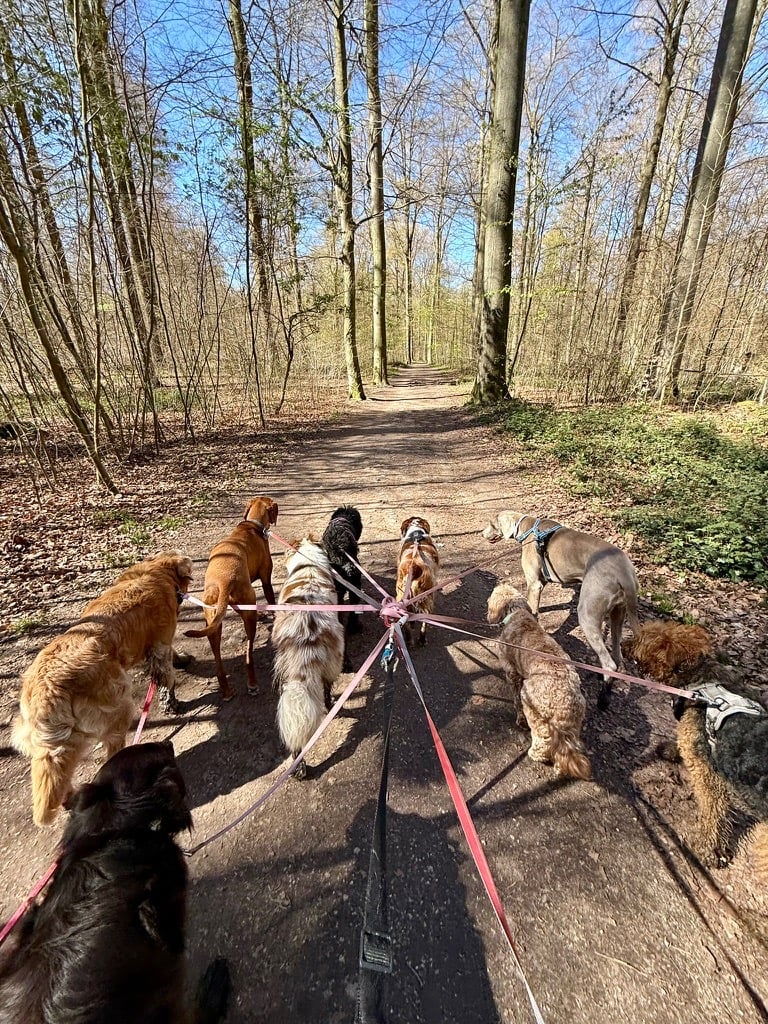
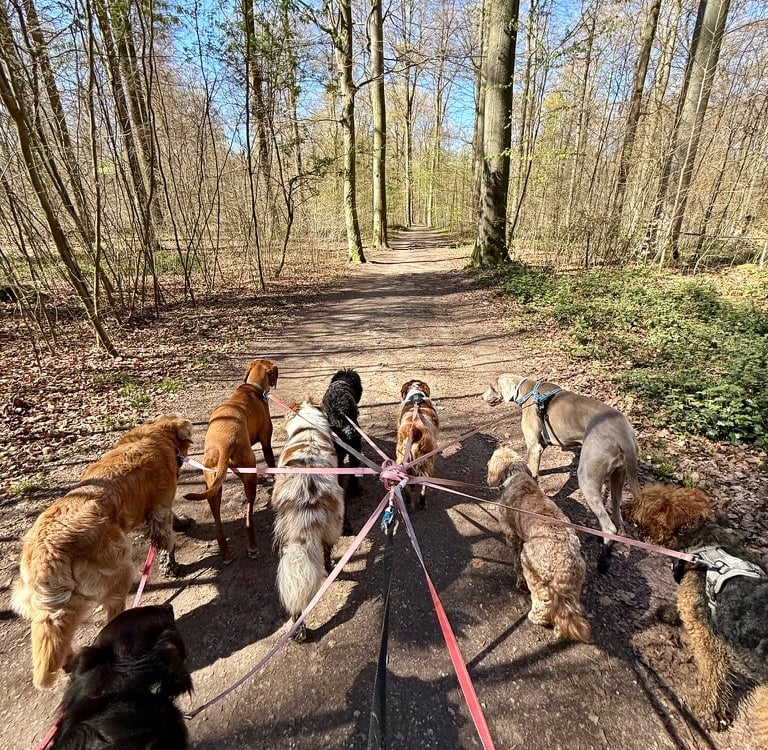
When you think of a walk with your dog, you often imagine something simple:
A leash, a dog, and let's go.
However, after hundreds of walks with dogs with very different profiles, we learned at Buddy Doggy that good equipment can completely change the experience of a walk.
Not because the equipment is used to control the dog.
But because it allows us to communicate better with him, to ensure his safety and to gradually offer him more freedom.
A good dog walker does not choose his equipment by chance.
Each element has a role.
The best equipment starts by getting to know your dog
Even before talking about leash, harness or GPS, the first question is:
"What does this dog need today?"
All dogs are different.
Some naturally remain close.
Some need a lot to explore.
Some are very comfortable with their environment.
Others need more time to gain confidence.
The choice of equipment depends on several elements:
The age of the dog
His energy
His behaviour with other dogs
His level of recall
His experience on a walk
The environment in which it evolves
As if to build confidence in walking, everything starts with observation.
The equipment must adapt to the dog.
Not the other way around.
The leash: a communication tool above all
The leash is probably the most used accessory on a walk.
But it is often misunderstood.
A leash should not only be a way to prevent a dog from leaving.
It is also a communication tool between humans and dogs.
Good use allows:
To guide
To reassure
To accompany
To anticipate certain situations
The way we use the leash greatly influences the ride.
A constantly stretched leash can sometimes increase:
Frustration
Excitement
Tensions during crossings
Conversely, a more relaxed leash often allows for better communication.
The goal is not to have permanent control.
The goal is to keep a connection.
The long leash: learning freedom gradually
At Buddy Doggy, the long leash is an essential tool.
Why?
Because it perfectly represents our philosophy:
Give the dog more autonomy without burning the steps.
Before being able to enjoy great freedom, a dog must learn several things:
Come back when we call him
Keep an eye on us naturally
Manage distractions
Stay connected despite the environment
The long leash allows the dog to:
To explore
To sniff
To take initiatives
To discover your environment
While maintaining security.
It is a bridge between the attached walk and freedom.
Over time, some dogs show that they can manage more autonomy.
Others will need longer support.
Both situations are normal.
Trust is built at the pace of the dog.
GPS: more freedom, always with security
Freedom is often what we want to offer our dogs.
Seeing them run, explore and naturally enjoy a space is something precious.
But freedom must always go with a question:
"Am I able to ensure his safety in this situation?"
Even a well-educated dog remains a living being.
A sudden noise, fear, wild animal or unexpected event can cause an unusual reaction.
That's why GPS has become an interesting tool in modern walks.
It should not to replace:
Education
The recall
The relationship with the dog
It simply provides additional security.
A GPS allows:
To quickly locate a dog if necessary
To be more serene in large spaces
To gradually accompany the learning of freedom
It's like a seat belt.
We don't use it because we think we have a problem.
It is used because anticipating is part of a responsible approach.
However, carrying a GPS does not mean that a dog is automatically ready to be free.
Before that, he must develop:
A reliable reminder
Good natural recall
Good management of its environment
A real connection with the person who walks him
Technology brings security.
But it is always the relationship that keeps the dog close to us.
At Buddy Doggy, GPS is used as an additional tool to allow dogs ready to have more autonomy to fully enjoy their adventures, while maintaining a secure environment.
Harness or collar: which one to choose?
This is a question that many owners ask themselves:
"Should my dog wear a harness or a collar?"
There is not a single right answer.
The choice depends on the dog.
Good equipment must respect:
His morphology
His comfort
His behaviour
The type of walk
An adapted harness can be interesting for:
Long drives with security belt
Quicker & easier catch
The learning phases
The use of a long leash
A collar may be suitable for some calm and accustomed dogs.
The most important:
The dog must be comfortable and be able to move naturally.
The equipment must accompany.
Not constrain.
Treats: a tool to build good experiences
A sentence often comes up: "My dog should listen without a treat."
However, rewards are a widely used tool in modern learning.
Why?
Because a dog learns from the positive experiences he repeats.
A treat can help to:
Strengthen a good reminder
Encourage calm behaviour
Reward a good choice
Create a positive association
It is not there to buy the dog's attention.
It is used to explain: "This behaviour is the one we are looking for."
Over time, the relationship, trust and the pleasure of returning also become rewards.
Water and the comfort of the dog
A good walk also respects physical needs.
A dog walker must be able to adapt the outing according to:
The weather forecast
The temperature
The age of the dog
His energy level
Some essentials:
Water available
Monitor for signs of fatigue
Adapt the rhythm
Respect the breaks
The best walk is not necessarily the one where the dog runs the most.
It is the one that corresponds to his needs.
The little accessories that make the difference
A successful walk is being prepared.
Some simple elements are essential:
Waste bags
Additional leash
Charged phone
Important information about the dog
Equipment adapted to the weather
Being prepared allows you to stay calm in the face of unforeseen events.
And a calm human often helps the dog to stay calm.
The best equipment will always remain the relationship
A good leash helps.
A good harness helps.
A GPS reassures.
But no accessory replaces:
The observation
Patience
Confidence
The dog's understanding
The material creates the conditions.
The relationship creates the results.
A dog doesn't just follow a leash.
He follows someone with whom he feels connected.
In summary
The right equipment allows you to:
✓ ensure the safety of the dog
✓ gradually develop your freedom
✓ improve communication
✓ strengthen confidence
✓ create more good experiences
The best equipment is not the one that controls the most.
It is the one that allows the dog to learn, explore and evolve serenely.
The Buddy Doggy philosophy
At Buddy Doggy, every tool used has a reason.
The leash, leash, GPS or rewards never replace the relationship with the dog.
They simply allow us to better support him.
Each walk is adapted to the dog in front of us: its character, its abilities and its needs.
Because a beautiful walk is not just a matter of equipment.
It is a question of trust built at every step.
Author: Richard Costaglioli