The right behaviour when you cross another dog!
How to react when another dog comes for a walk?
Richard Costaglioli - Dog Walkeur Pro.
4/1/20263 min read
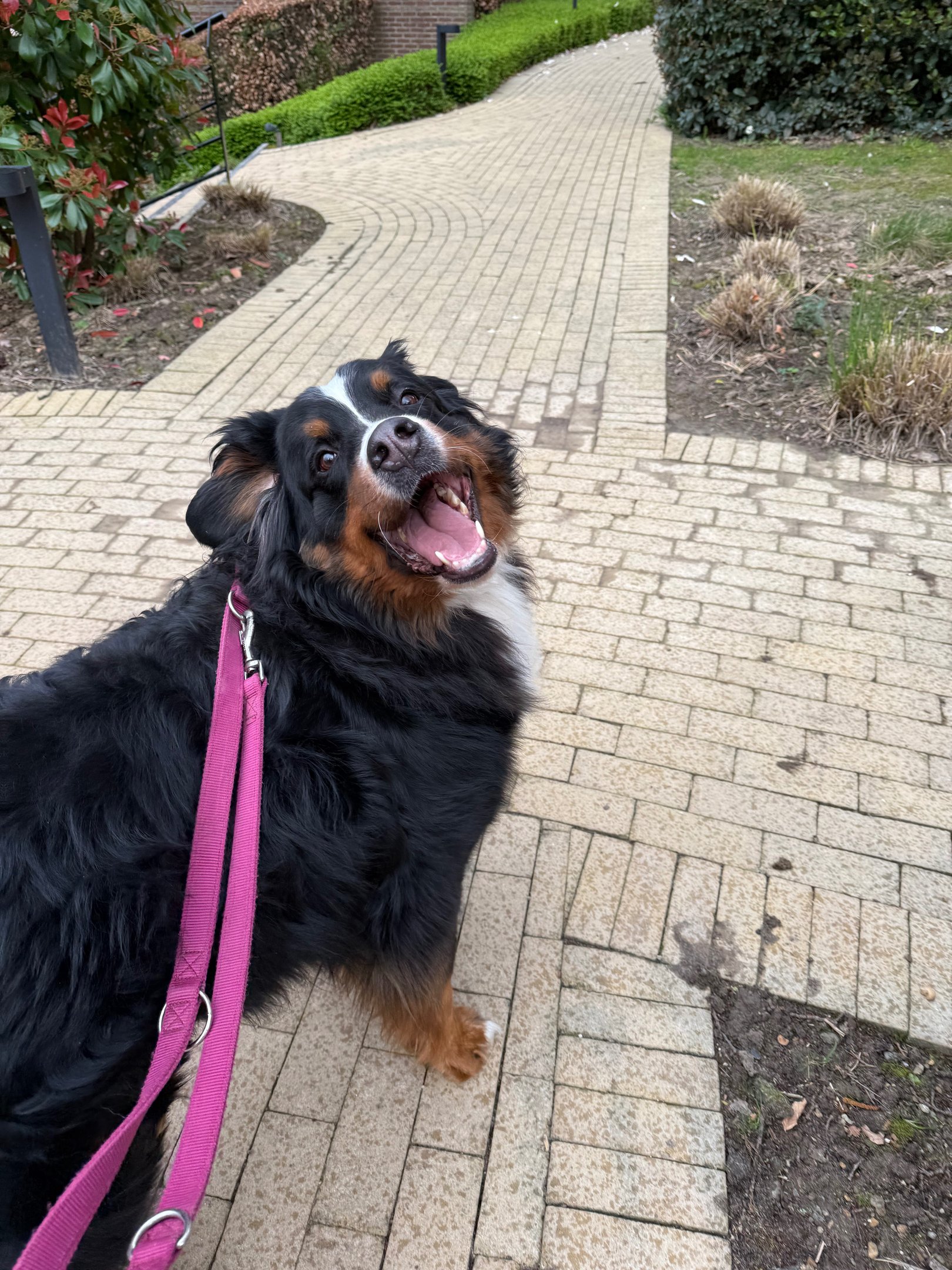
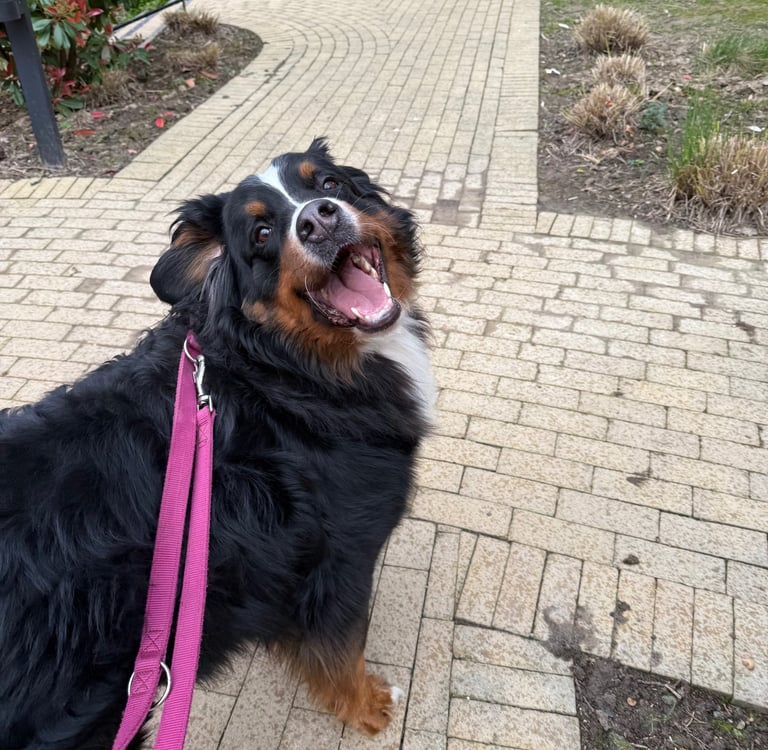
This is a situation that all owners are familiar with.
You are on a walk, your dog enjoys quietly... then you see another dog arrive in the distance.
At that time, many questions arise:
"Do I let my dog go see him?"
"Will they get along well?"
"Do I have to shorten the leash?"
"What if it goes wrong?"
At Buddy Doggy, we experience these situations daily with dogs with very different profiles.
With experience, we learned one essential thing:
A good crossing begins before the dogs meet.
It depends on three elements:
Your dog's knowledge
The context of the meeting
Your own behaviour
It all starts with knowing the limits of your dog
Before managing another dog, you need to understand yours.
Every dog has its personality.
Some people love dating.
Some prefer to observe before approaching.
Others need to keep their distance.
None of these behaviours are necessarily bad.
The real question is: "What is my dog capable of today?"
As we often explain at Buddy Doggy, trust is gradually built.
To succeed in crossings, you need to know:
The distance at which your dog remains calm
His level of excitement in front of another dog
His ability to come back to you
His way of communicating
A dog that needs space is not a difficult dog.
It's just a dog that shows a limit.
And a limit respected today can evolve positively tomorrow.
Read the situation before acting
Not all crossings are alike.
A dog will not necessarily react in the same way depending on the environment.
In town
Urban crossings are often the most complicated.
Why?
Because dogs have little choice.
Narrow sidewalks.
Noises.
Cars.
Short line.
Little space to communicate.
Two dogs that arrive face to face in a straight line can feel tension more easily.
In this context, it is sometimes better to:
To slow down
Create distance
Make a slight curve
Let your dog observe
Avoiding too intense a crossing is not a failure.
This is sometimes the best decision.
In the forest or in a park
Open spaces often allow for more natural interactions.
Dogs can:
To slow down
To skirt
To feel
Choose their distance
But more freedom also requires more attention.
Before allowing an interaction to take place, observe:
Do the two dogs seem relaxed?
Do the two owners agree?
Can my dog come back if necessary?
Freedom works when it is accompanied.
Dog on a leash or free dog: a big difference
One element changes the situation enormously: the leash.
A leash limits the dog's possibilities.
He can't always:
To distance oneself
Naturally avoid
Choose your approach
Some very sociable dogs in freedom can become more tense on a leash.
It's not because they are aggressive.
Sometimes it's just because they feel blocked.
Some useful reflexes:
Keep a relaxed leash
Avoid shooting brutally
Don't force face-to-face contact
Move forward calmly
A straight leash often conveys additional tension.
Your behaviour influences your dog
This is probably the point that many owners underestimate.
Your dog is watching you a lot.
Imagine the situation:
You see a dog coming.
You are blocking your breathing.
You directly shorten the leash.
You stare at the other dog.
Your body becomes tense.
Your dog can understand: "Something worrying is happening."
Conversely, calm behaviour helps a lot:
Breathe normally
Continue to move forward
Speak naturally
Keep a stable energy
Trust works both ways.
Your dog learns from you as much as you learn from him.
The steps to a successful crossing
Step 1: Observe before the meeting
Before thinking about controlling, look.
How does the other dog arrive?
Is he:
Relaxed?
Fixed on your dog?
Very excited?
Recalled by its owner?
Observation gives you the information to make the right decision.
Step 2: Adjust the distance
Distance is your best tool.
A dog that reacts at 2 metres can sometimes stay perfectly calm at 10 metres.
The goal is to find the area where your dog can:
See the other dog
To think
Stay available
This is how you create good experiences.
Step 3: Rewarding the calm
Many people intervene only when the dog reacts badly.
But learning is mainly done before.
Is your dog looking at another dog calmly?
It's already a success.
Does your dog choose to come back to you?
That's an excellent decision.
Value these moments.
Step 4: Do not seek the meeting at any cost
A good crossing does not necessarily mean:
“Dogs play together.”
Sometimes the best cross-section is simply:
Two dogs that pass calmly next to each other.
This is a very important skill.
Not all humans say hello to everyone they meet.
Neither do dogs.
Turn every walk into learning
Progression comes from the accumulation of good experiences.
One successful crossing after another.
Little by little:
The dog is gaining confidence
The owner relaxes
Communication is getting better
The limits change because the dog learns that he can handle the situation.
In summary
To successfully cross with another dog:
✓ know your dog's limits
✓ observe the context
✓ adapt the distance
✓ keep a relaxed attitude
✓ never force an interaction
✓ look for progress, not perfection
A balanced dog is not a dog that meets everyone.
He is a dog capable of living in situations calmly.
The Buddy Doggy philosophy
At Buddy Doggy, every walk is an opportunity to learn.
We do not seek to put dogs in impossible situations.
We get to know them, respect their rhythm and create enough good experiences to change their limits.
Because a beautiful meeting always starts with a good understanding.
Author: Richard Costaglioli - Professional Dog Walker