Canine educator or behaviourist: who should I call?
The right call according to your dog's needs.
Samantha Thirifays - Educator and coach in canine behaviour
6/21/20263 min read
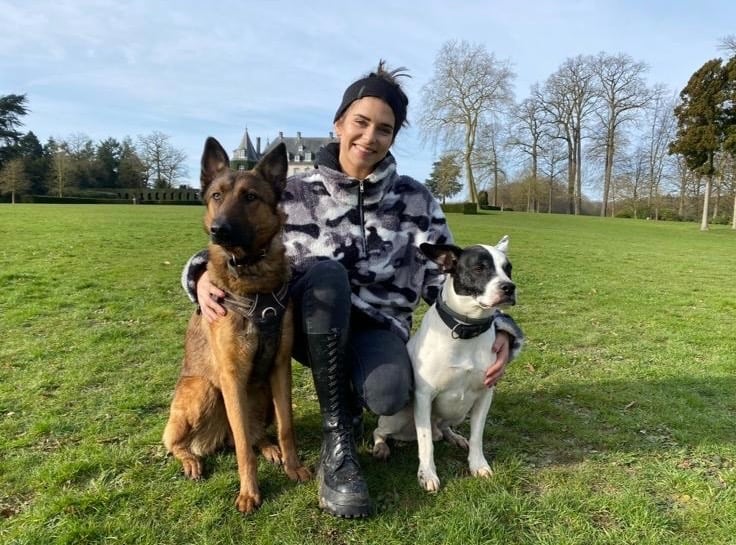
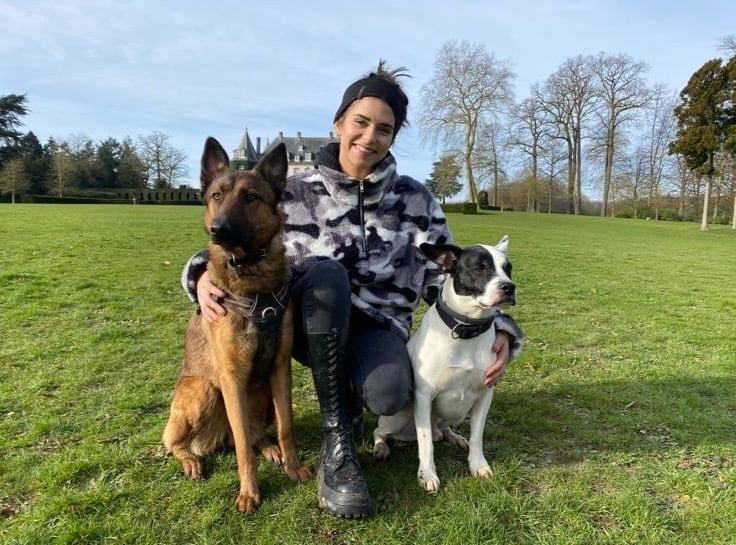
When a problem appears with your dog, it is not always easy to know which professional to contact.
Between the canine educator and the canine behaviourist, the missions sometimes seem to be confused, and yet their areas of intervention are different.
Contrary to popular belief, the difference does not lie in the fact that one would practice while the other would be limited to analysis.
Both work concretely with the dog and its owner.
The real difference lies rather in the nature of the demand.
When to consult a behaviourist?
The behaviourist, or canine behaviour coach, help when the dog has a problematic behaviour already present or when a situation may impact his emotional balance.
Its role is to understand the origin of the behaviour observed in order to put in place an adapted and sustainable support.
You can consult a behaviourist if your dog has:
Aggressiveness or responsiveness towards other dogs.
Aggressiveness or responsiveness towards humans.
Conflicts with other animals in the household.
Fugues.
Stress or anxiety.
Fears or phobias.
Separation anxiety.
Destruction.
Excessive barking.
Repeated howls or crying.
Obsessive compulsive disorder (OCD).
Stereotypes.
Self-mutilation.
Hyperactivity.
Uncleanliness in an adult dog.
Difficulty managing loneliness.
A difficulty in adapting to a change of life.
The behaviourist can also accompany you during important events such as:
The arrival of a baby.
The arrival of a cat or another animal.
A move.
A separation or significant modification of the home.
In all these situations, the goal is not simply to make a symptom disappear, but to understand why the behaviour appeared in order to act sustainably on its cause.
When to consult a canine educator?
The canine educator is mainly involved in the learning and improvement of behaviours useful to daily life.
His work aims to teach the dog what is expected of him and to accompany his owner in the implementation of these learnings.
You can consult an educator for:
Learning to sit.
Learning to lie down.
Learning to not move.
The stay.
The recall.
Walking on a leash without pulling.
Walking next to you.
The first releases in freedom.
The socialisation of the puppy.
Potty training.
Learning from loneliness.
The rules of life in the home.
The management of annoying daily behaviour.
The improvement of the acquired knowledge.
The educator also supports owners who wish to develop better communication with their dog or strengthen their relationship on a daily basis.
Two complementary professions
In the real life, educators and behaviourists often work hand in hand.
When a dog has a behavioural disorder, it is usually necessary to understand the origin of the problem before setting up adapted educational work.
Conversely, once the causes have been identified, practical exercises often become essential and can be carried out with the educator or the behaviourist.
Many professionals today have a dual competence in canine education and behaviour.
This global approach makes it possible to support the human-dog pair both in learning and in solving behavioural difficulties.
In summary, the educator teaches the dog what to do.
The behaviourist intervenes when the dog is already doing something that is a problem and it is necessary to understand the reasons in order to make it evolve sustainably.
About the author of this article
My name is Samantha Thirifays, educator and coach in canine behaviour.
I help the owners both in the education of their dog and in the
Resolution of behavioural difficulties such as responsiveness, aggressiveness, anxiety, fears, destruction or cohabitation problems.
I use the name canine behaviour coach on purpose, which designates the same profession than a behaviourist, but which I find clearer and more representative of my approach.
My role is to understand the dog's behaviour while concretely accompanying the dog and his family towards adapted and sustainable solutions.
This dual competence in education and behaviour allows me to propose a global support, from the puppy in apprenticeship to the dog with disorders more complex behaviour.
Contact: +32 470 56 69 73